
Rental demand across Victoria increased steadily through 2025, with tight supply levels and solid population growth expected to underpin further increases through the year ahead.
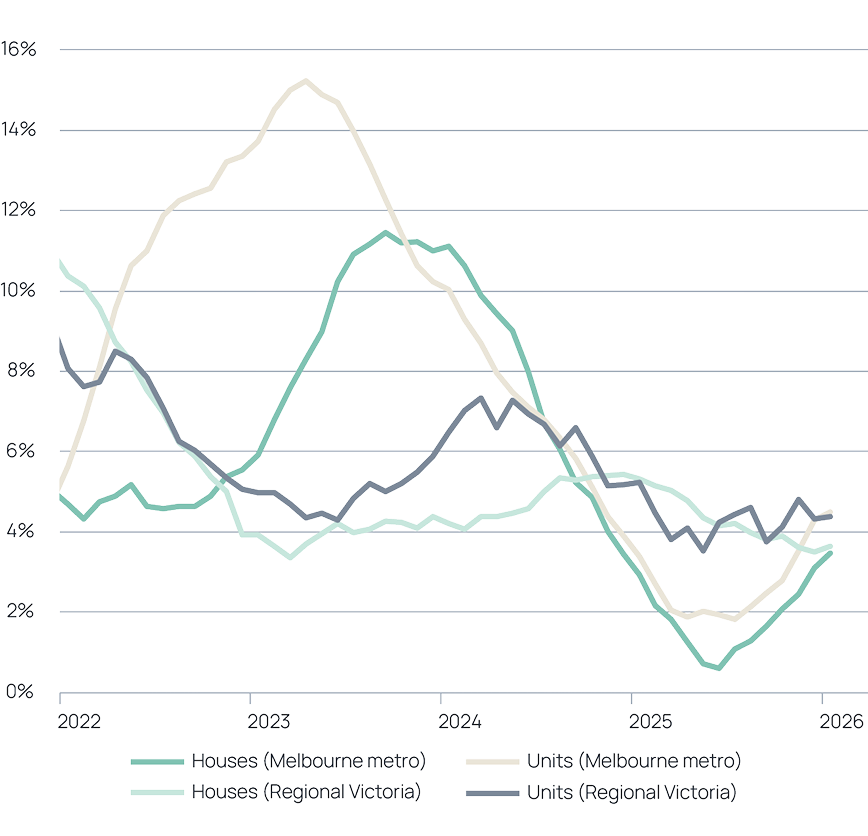
Despite hefty rent increases between 2022-2024 (averaging 7.9% annually), Melbourne's rental growth is accelerating again (Figure 1). According to the Cotality Rent Value Index, which tracks the change of combined rent valuations over time, Melbourne rents rose 3.9% in the year to February 2026, rebounding from a low of 1.1% in July 2025. Units led the charge, up 4.5%, with median rents hitting $606 per week. House rents gained 3.5%, recovering from just 0.6% growth earlier in July 2025, to reach $651 per week by February 2026.
Regional Victoria also posted strong annual results, including 3.6% for houses and a 4.4% surge in unit rents. Rental vacancy was low at 1.1%, down from 1.3% a year prior.
Figure 1. Change in Cotality Rent Value Index (rolling, annual) - Melbourne
Source: Cotality. Based on the annual change in the Cotality rent value index
Indexed median rent values
Melbourne
Regional Victoria
Why the strength? On the demand side, real wages growth hit 1.3% in the year to June 2025, the highest in six years. Though the December figures show an easing in real wages growth due to a reacceleration in inflation, tight labour market conditions have allowed wages growth to keep pace. Further to this, net overseas migration added 88,000 people to Victoria in the year to June, reinforcing demand. Both are contributing factors to boosting rental competition.
From a supply perspective, vacancy rates tightened to 1.3% in Melbourne as of February 2026, down from 1.6% a year ago and below the national average of 1.5%. Rental bond data shows a 3.4% decline from the June 2023 peak to September 2025, suggesting a smaller stock of rentals.
Capital growth trends improved on 2024 alongside rising rent incomes, tightening supply and interest rate relief in 2025. The Cotality Home Value Index, which tracks the combined estimated sales value of all dwellings in a market over time, recorded Melbourne home values up 4.9% and regional Victoria rising 6.5%.

12 months to Dec 2025
12 months to Dec 2025
From a supply perspective, vacancy rates tightened to 1.3% in Melbourne, down from 1.9% a year ago and below the national average of 1.9%.
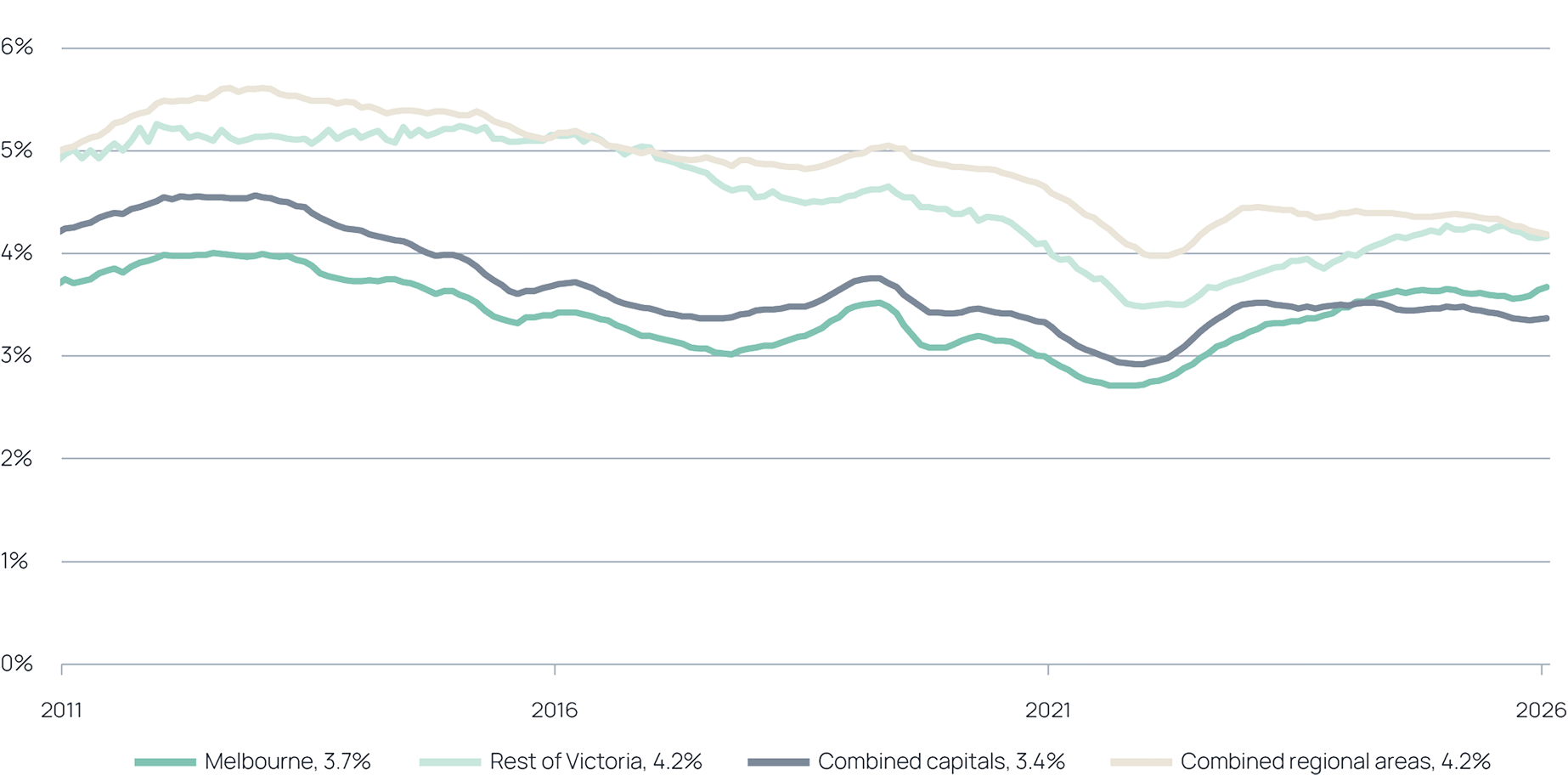
Gross rent yields, which are annualised rent divided by current home values, held steady across the state over the year. Thanks to affordable purchase prices and solid rent growth, Victoria's yields are now actually higher than the combined capital city figure, and on par with the combined regional rate (Figure 2). This indicates a good time for investors to enter the market while values are still well-priced relative to rental return.
Figure 2. Change in gross yields, Melbourne vs other regions
Source: Cotality. Based on the annual change in the Cotality rent value index
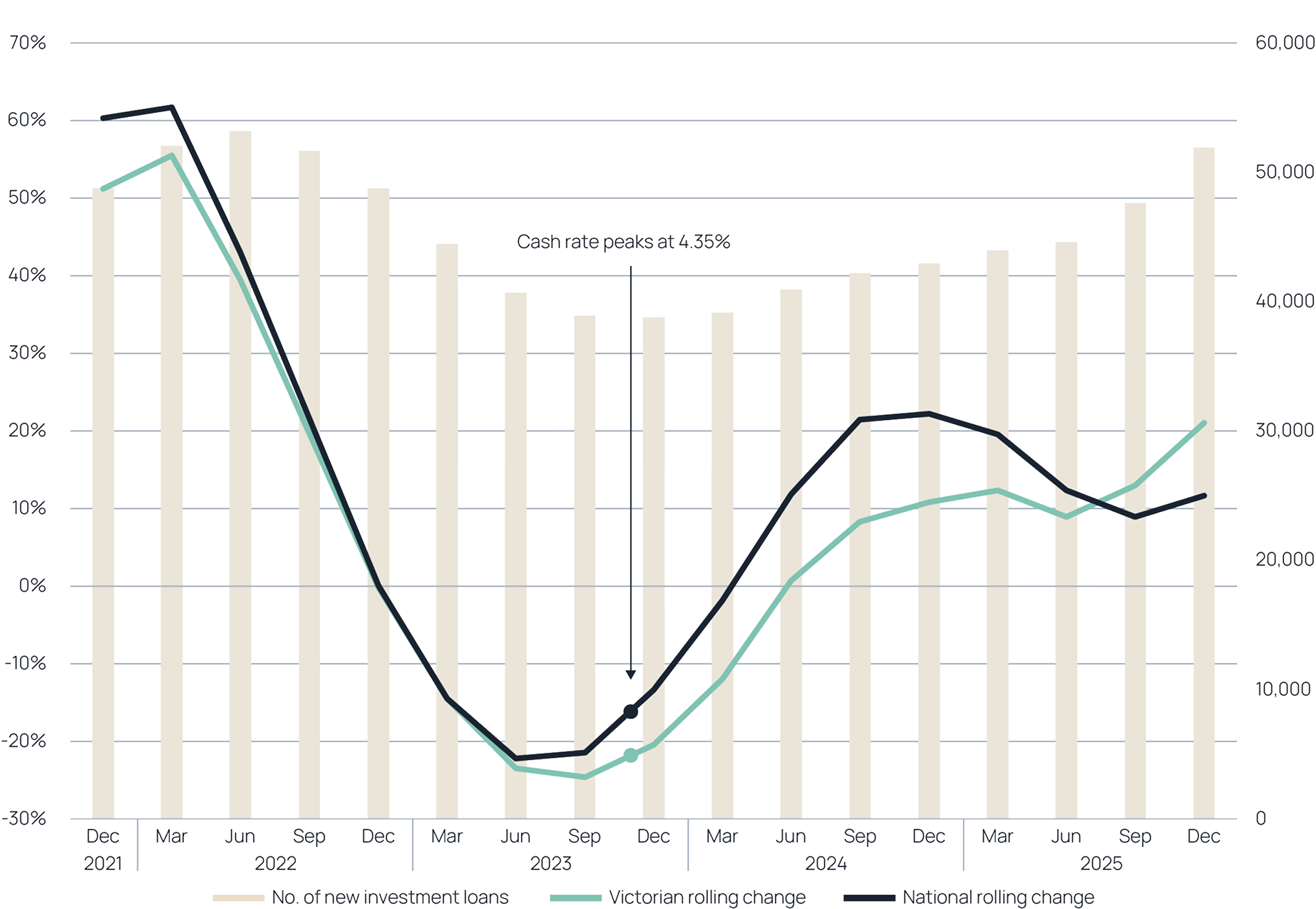
The combination of rising rents, steady yields, and renewed price growth signals confidence for both home buyers and investors. Lending data backs this up: Australian Bureau of Statistics figures show new investment loans for Victorian homes overtook national growth in 2025. In the December quarter of 2025, investment loans hit a series high of 15,735. This was up 12.3% on the previous quarter, a clear sign investors are returning in force.
The combination of rising rents, steady yields, and renewed price growth signals confidence for both home buyers and investors.
Figure 3. Rolling annual change in investment loan number & investment loans secured for Victorian home purchases
Source: Australian Bureau of Statistics
Why Victoria offers the best value
Victoria's property market has
faced headwinds, but its long-term
fundamentals remain rock solid. For
two decades, ABS data shows Victoria
has accounted for 26.2% of Australia's
net overseas migration, 30.4% of
employment growth, and 22.5% of GDP.
COVID-19 temporarily disrupted this trajectory: population dipped, extended lockdowns slowed activity, and tax hikes dampened investment. But the recovery is underway in Victoria. Population growth surged 1.8% in the year to June, tying Queensland for second-fastest nationally. State final demand (SFD), a key indicator of a state's domestic economic activity released in the ABS national accounts data, increased by 0.7% in the December quarter of 2025. This was the third-strongest result of the states and territories behind SA and NT.
Victoria
This rebound creates a rare buying window. Over the past five years to February 2026, combined capital city home values rose 40.2%, yet Melbourne climbed just 11.8%, below inflation for the city (around 20%). Regional Victoria's housing fared better at 27.4% but still lagged the combined regions at 55.4%. Figure 4 shows Melbourne's slide from the second-most expensive market to fifth among capitals, and regional Victoria from the second-most expensive of the regions to the fourth.
Figure 4. Indexed median home values, Melbourne and Regional Victoria
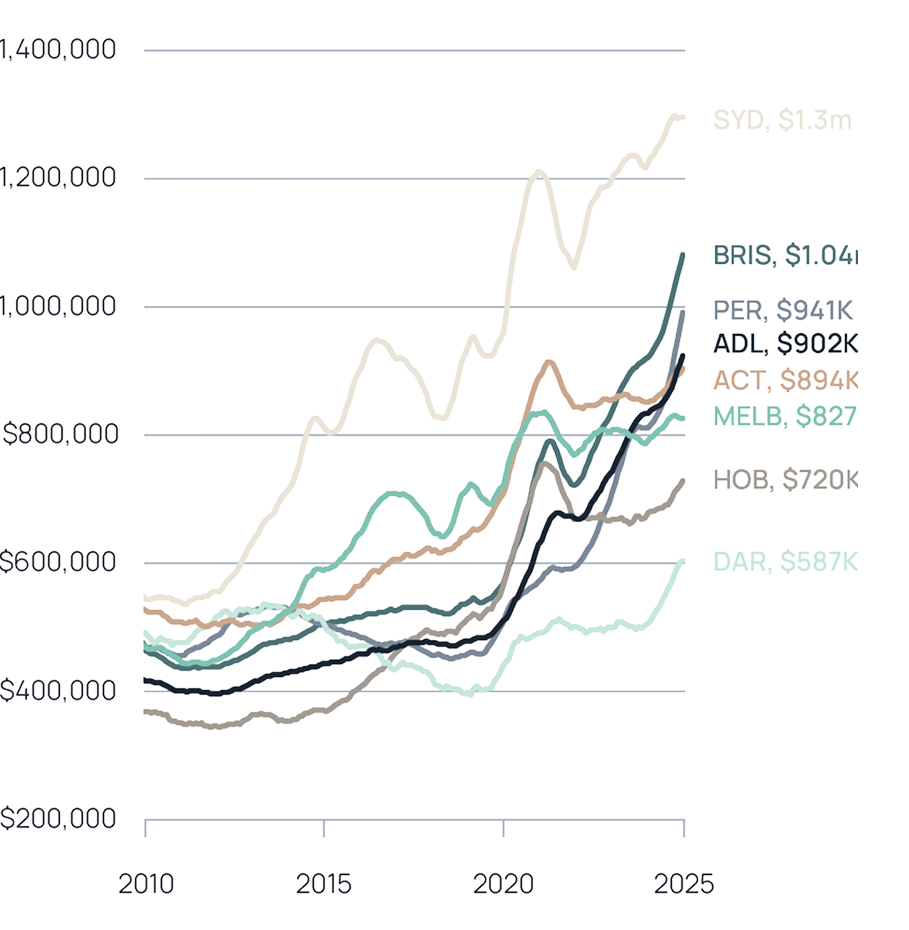
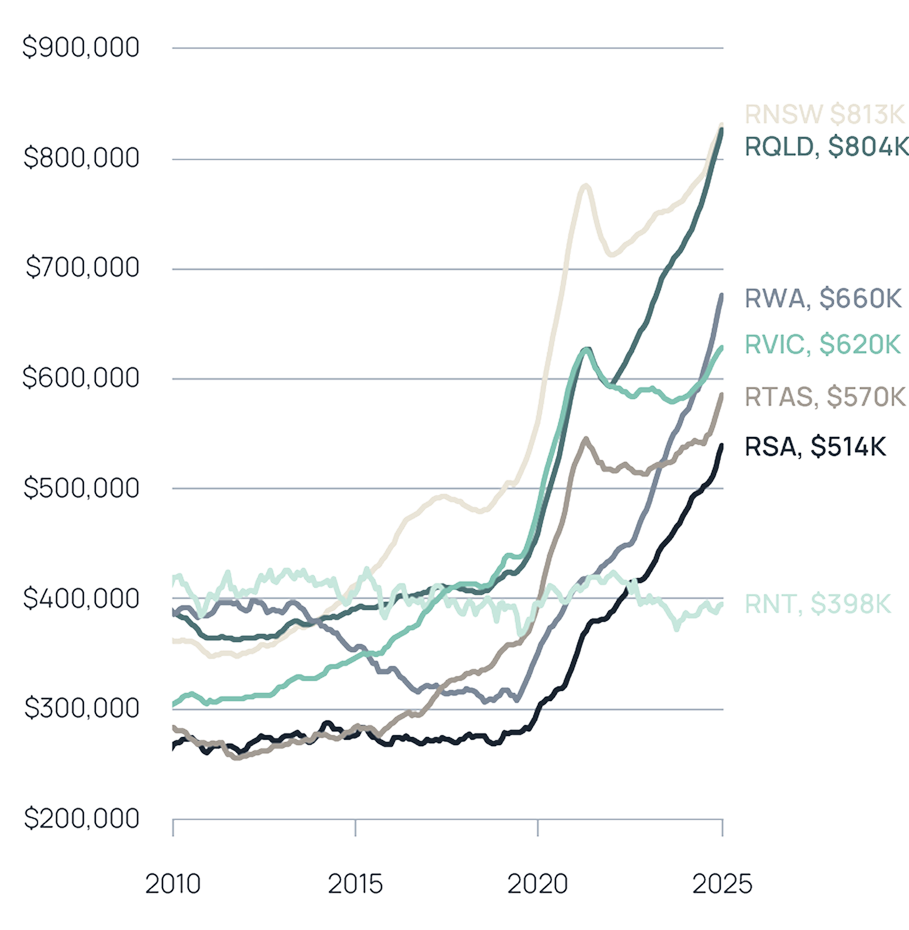
Source: Cotality, January 2010 to December 2025
Melbourne isn't just any city; it's a proven global leader. The Economist Intelligence Unit's Global Liveability Index ranks 170 cities, placing Melbourne fourth globally in 2025. Despite ranking highest of the Australian and New Zealand cities featured on the list, it has the second- lowest median dwelling value behind Wellington, which ranked 20th (Figure 5). That's exceptional value for a world- class city.
Bank forecasting also tips Melbourne to rise in 2026. Westpac forecast a 4% increase in values this year, and ANZ is forecasting a rise of 2.1%. While rising interest rates pose a challenge for demand in 2026, both banks cite the relative under-performance in recent cycles creating an affordability advantage and scope for future price increases.
For investors, this means Victoria offers rare value with strong fundamentals. A tight rental market, rising prices, and renewed confidence. The window is open now, and those who act early stand to benefit.
Figure 5. Median dwelling value (AUD) vs liveability ranking
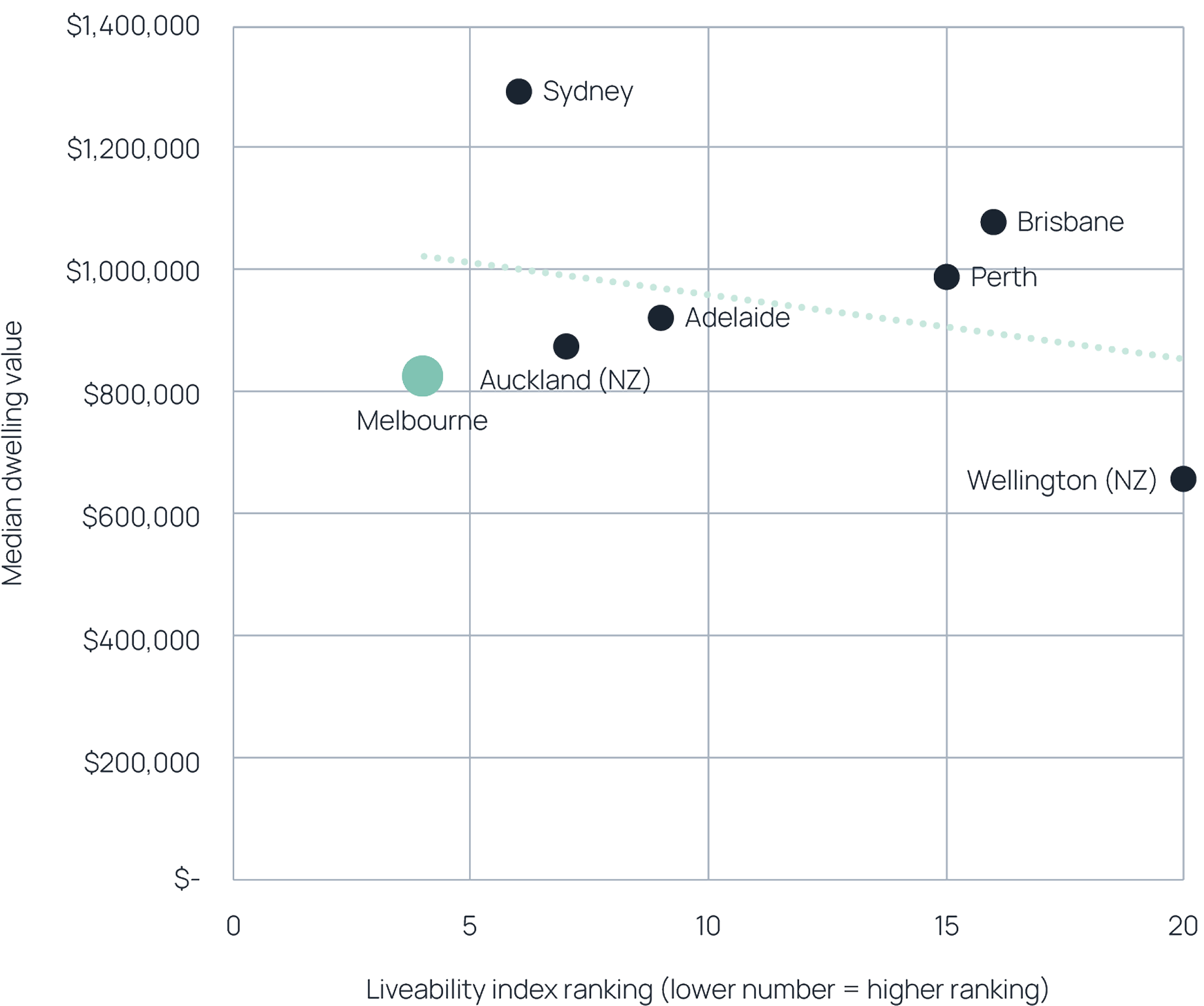
Source: EUI, The Global Liveability Index 2025